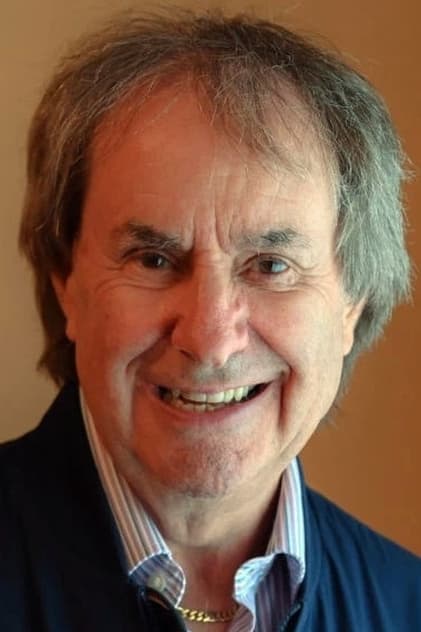
Chris De Burgh
Christopher John Davison (born 15 October 1948), known professionally as Chris de Burgh, is a British-Irish singer-songwriter and instrumentalist. He started out as an art rock performer, but subsequently started writing more pop-oriented material. He has had several top 40 hits in the UK and two in the US, but he is more popular in other countries, particularly Norway and Brazil. His 1986 love song "The Lady in Red" reached number one in several countries. De Burgh has sold over 45 million albums worldwide.
De Burgh was born in Venado Tuerto, Argentina, to Colonel Charles John Davison, a British diplomat, and Maeve Emily (née de Burgh). His maternal grandfather was Sir Eric de Burgh, a British Army officer who had been Chief of the General Staff in India during the Second World War. He took his mother's maiden name, "de Burgh", as a stage name when he began performing, while his legal surname remains "Davison". His father had substantial farming interests, and Chris spent much of his early years in Malta, Nigeria and Belgian Congo, as he, his mother and brother accompanied Colonel Davison on his diplomatic and engineering work.
The Davisons finally settled in Bargy Castle, County Wexford, Ireland, which was somewhat dilapidated at the time. It was a twelfth-century castle which Eric de Burgh bought in the 1960s. He converted it into a hotel, and young Chris sang for the guests there.
De Burgh attended Marlborough College in Wiltshire, England, where he was in the year below Nick Drake; de Burgh asked to join a jazz band Drake had formed with four schoolmates, the Perfumed Gardeners, but was rejected as his taste was "too poppy". De Burgh went on to graduate from Trinity College Dublin, with a Master of Arts degree in French, English and History. Chris de Burgh signed his first contract with A&M Records in 1974, and supported Supertramp on their Crime of the Century tour, building himself a small fan base. His début album, Far Beyond These Castle Walls, was a folk-tinged stab at fantasy in the tradition of the Moody Blues. It failed to chart upon its release in late 1974. A few months later, he released a single called "Turning Round" from the album, released outside the UK and Ireland as "Flying". It failed to make an impression in the UK, but it stayed on top of the Brazilian charts for 17 weeks. This became a familiar pattern for the singer/songwriter, as every one of his 1970s albums failed to chart in the UK or US while they racked up big sales in continental European and South American countries.
In 1975 his second album, Spanish Train and Other Stories, was released. Whilst (again) not a huge commercial success, the album and tour expanded the fan base, with de Burgh starting to attract a cult following. Along with the epic title track, other fan favourite tracks from the album included "Patricia The Stripper" and "A Spaceman Came Travelling" (the latter released the following year as a single). ...
Source: Article "Chris de Burgh" from Wikipedia in English, licensed under CC-BY-SA 3.0.
Acting
 TV
TV
The Bachelor
as Self
2002
 TV
TV
Top of the Pops
as Self
1964
 TV
TV
Ant & Dec's Saturday Night Takeaway
as Self
2002
 TV
TV
The One Show
as Self
2006
 TV
TV
Wetten, dass..?
as Self
1981
 TV
TV
Hell's Kitchen
as Self
2004
 TV
TV
Champs-Elysées
as Self
1982
 TV
TV
Volle Kanne
as Self
1999
 TV
TV
Verstehen Sie Spaß?
as Self
1980
 TV
TV
DAS!
as Self
1991
TV
Pebble Mill
as Self
1991
 TV
TV
Chris Moyles' Quiz Night
as Self
2009
 TV
TV
LOL: Last One Laughing Ireland
as Self
2024
 TV
TV
ZDF-Fernsehgarten
as Self
1986
 TV
TV
NDR Talk Show
as Self
1979
TV
3 nach 9
as Self
1974
 TV
TV
Brisant
as Self
1994
TV
The Alan Titchmarsh Show
as Self
2007
Movie
How to Cheat in the Leaving Certificate
as Petrol Pumper
1998
TV
Die ultimative Chartshow
as Self
2003
 TV
TV
Abendschau
as Self
2000
 TV
TV
Morgenmagazin
as Self
1992
 Movie
Movie
ДИСКОТЕКА 80-х
as Self
2014
TV
The Terry and Gaby Show
as Self
2003